On this page
"PDF to text" and "PDF to Markdown" sound like the same job described two ways. They start the same and end very differently, and the difference decides whether an AI system can answer a question from your document or only produce something that sounds like an answer.
Both strip the packaging
A PDF stores glyphs at pixel coordinates alongside fonts, images, and layout instructions. Most of that file is presentation. Both conversions throw the presentation away and keep the characters, which is why both outputs are dramatically smaller than the original and why both are far easier for a model to read than the PDF itself.
That shared step is most of the value. If you are choosing between sending a raw PDF to an AI system and sending either of these, either one wins.
Where they part
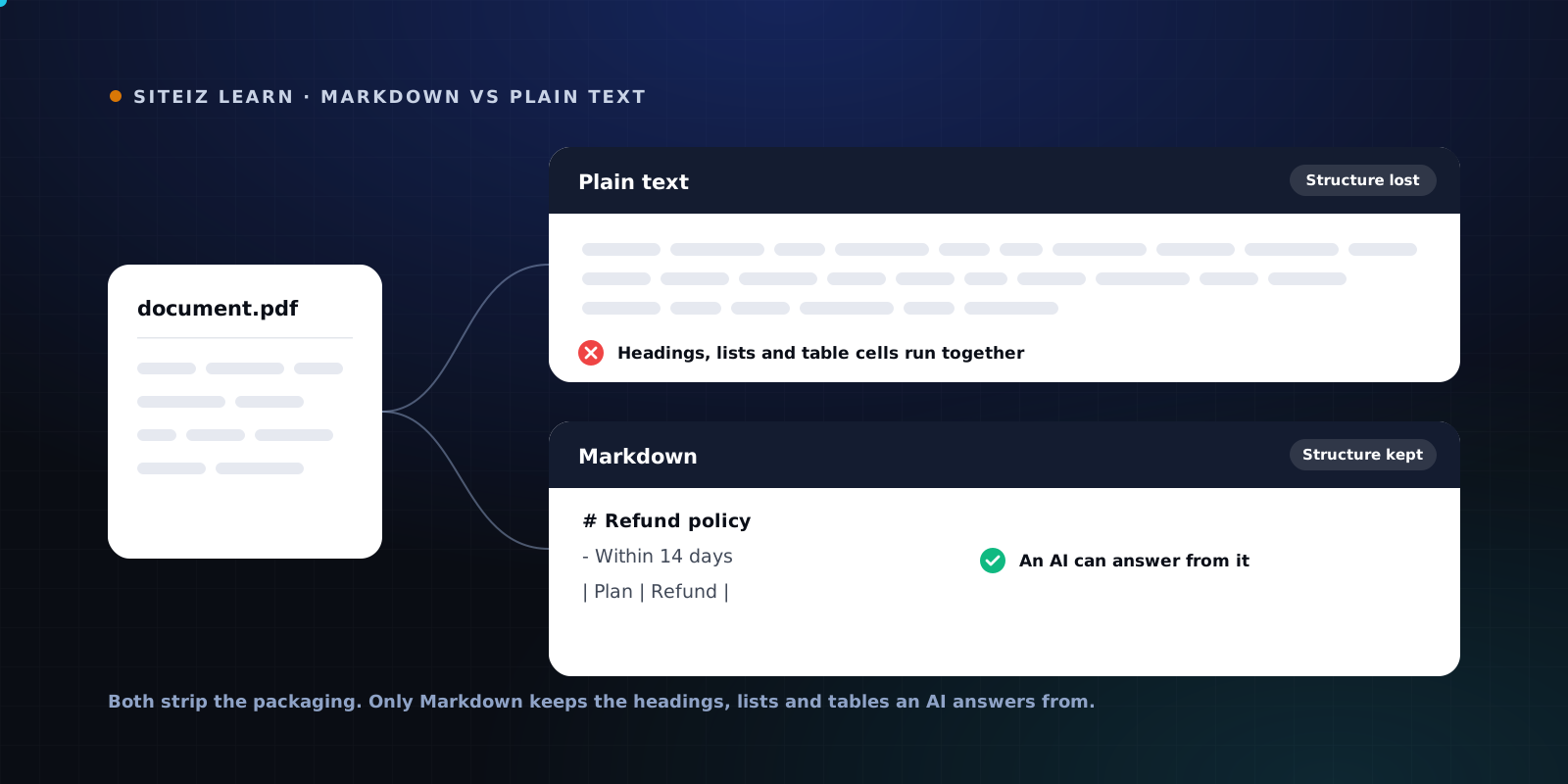
Plain text keeps the words. Markdown keeps the words and the shape of the document.
| Plain text (.txt) | Markdown (.md) | |
|---|---|---|
| Headings | Become ordinary lines | Stay marked with # |
| Lists | Become sentences | Stay as list items |
| Tables | Flatten into loose values | Stay as tables with rows and columns |
| Emphasis and links | Lost | Preserved |
| Opens in any editor | Yes | Yes |
| Extra size | None | A few percent |
Everything in that table comes down to one thing: in plain text, structure exists only in the layout of characters on lines, which is exactly the kind of visual signal a model has to guess at. In Markdown it is written down.
Why the structure changes the answer
Three concrete consequences, and each one shows up in output quality rather than in an error message.
Chunking. Retrieval systems split documents before embedding them. Markdown headings give a splitter real boundaries, so a chunk ends where a section ends. Plain text gives it nothing, so it cuts at a character count and slices arguments in half.
Tables. A Markdown table keeps the relationship between a label and a value. A flattened table is a run of numbers near some words, and a model asked about a specific cell will pick something plausible from the neighbourhood.
Citation. An AI can only quote and attribute a passage that reads as a coherent unit. A clean section under a clear heading is quotable. A slice of a wall of text is not.
When plain text is genuinely fine
Do not over-engineer this. Plain text is the right answer when there is no structure to lose.
Meeting transcripts, chat logs, single-column letters, poetry, and anything you are running a quick keyword search over all convert perfectly well to plain text. Adding Markdown to a document with one heading and no tables buys you nothing.
The moment a document has sections you would navigate by, a list you would count, or a table you would look a number up in, that changes. Reports, white papers, datasheets, specifications, manuals, contracts, and financial statements all fall on the Markdown side, and those tend to be exactly the documents worth feeding to AI in the first place.
Markdown is plain text
Worth stating plainly, because it removes the perceived tradeoff. A .md file contains nothing but ordinary characters. It opens in Notepad, TextEdit, vim, or anything else. You can rename it .txt and nothing breaks. Every tool that accepts plain text accepts Markdown.
So the real question is not "which format" but "do I want the structural markers or not". They cost a few characters and they are ignorable by anything that does not care. There is very little reason to refuse them.
Drop in a report or datasheet and read the Markdown that comes back: reading order rebuilt, headings marked, tables intact. It is plain text, so it opens anywhere. Nothing is uploaded and text PDFs are free.
Convert a PDF for free →The failure that is worse than either
Both formats assume the extraction underneath them worked. If the converter read a two-column page straight across, you get scrambled sentences in whichever format you chose, and Markdown headings on top of nonsense do not help.
Columns read straight across:

The options for choosing a customised
interior design are 1. Brown/Light
practically limitless. To make your
choice a little easier, our 2. Brown/Dark
designers have put together a selection
of interiors with 3. Black/Dark
perfectly matched colours.
Reading order comes first, structure second, format third. It is worth opening the output and reading one page you know well before you index anything, whichever format you picked.
What to do
If the document has structure worth keeping, convert to Markdown. If it does not, plain text is fine and Markdown costs you almost nothing anyway. In both cases, check that the reading order survived before you trust the file.
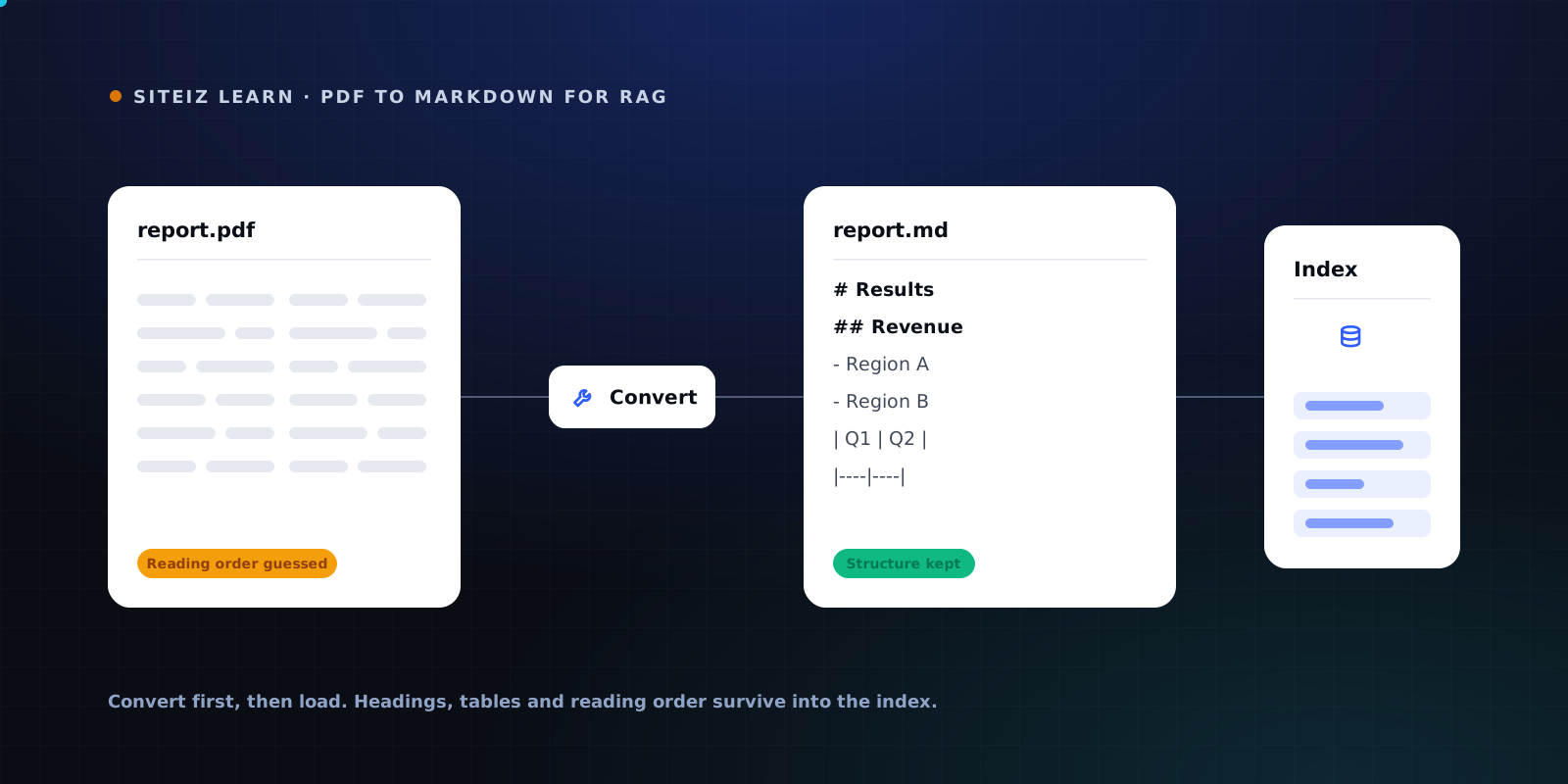
The PDF to Markdown converter rebuilds reading order first and writes structured Markdown, entirely in your browser. If you are wiring the output into a retrieval pipeline, converting before loading covers the ingestion details, and why Markdown matters for AI search covers the reasoning in more depth.
Common questions
Is Markdown the same as plain text?
Markdown is plain text with a few structural conventions layered on top. A .md file contains nothing but ordinary characters, so it opens in any editor and can be renamed .txt. The difference is that a handful of those characters, such as
When should I use plain text instead of Markdown?
When the source has no structure worth keeping. A transcript, a log file, or a single-column letter loses nothing as plain text. As soon as the document has sections, lists, or tables you would miss, Markdown is the better target because it costs nothing extra and keeps them.
Does Markdown use more tokens than plain text?
Slightly, since the markers themselves are characters. The overhead is a few percent on typical documents and it buys chunk boundaries and intact tables, which reduce how much irrelevant context you have to retrieve in the first place. On balance it usually lowers total tokens spent per answer.
What about converting PDF to Word or HTML instead?
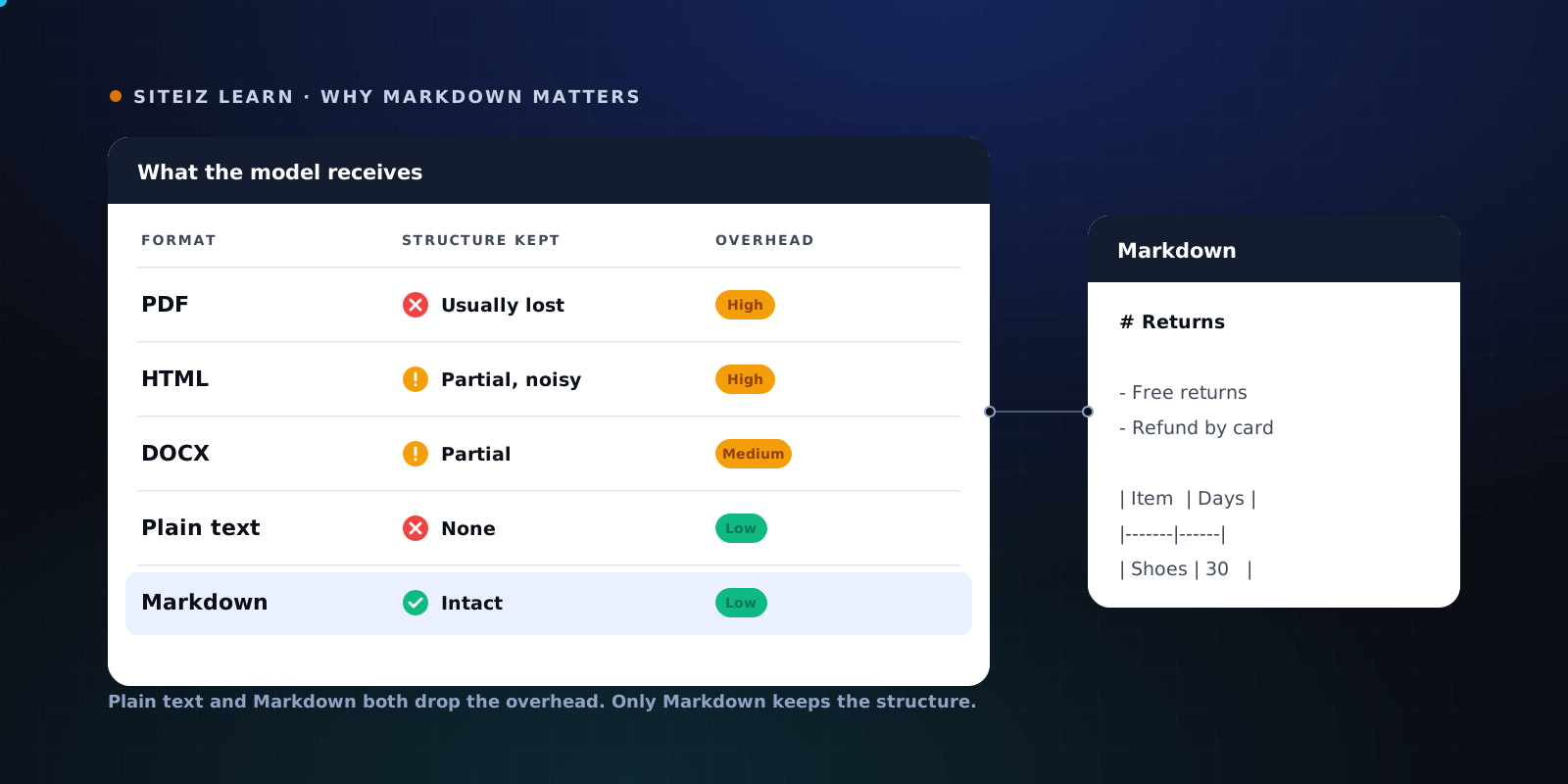
Both keep structure but add a lot of packaging. DOCX is zipped XML that a pipeline has to parse first, and HTML arrives wrapped in tags, navigation, and scripts. Markdown keeps the same structural signals with almost none of the overhead, which is why it became the default for feeding documents to language models.