Watch: Google's AI Search Guide: GEO Is Still SEO (6 Myths Ruled Out) (3:28). The key points of this guide, explained on video.
On this page
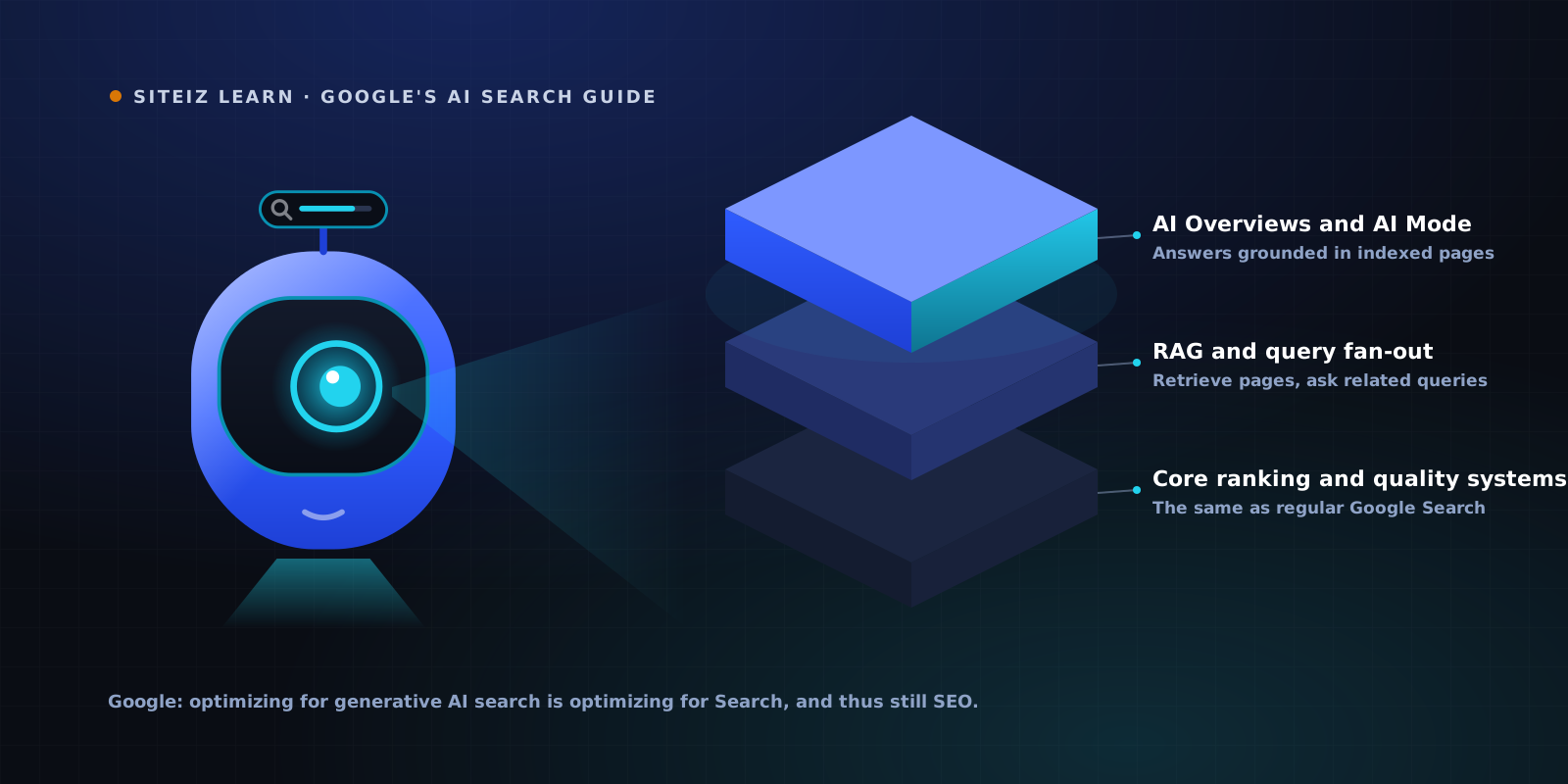
Google has an answer to "what is GEO?" and it is short: it is SEO. In Optimizing your website for generative AI features on Google Search, first published May 15, 2026 and last updated July 10, Google says that optimizing for generative AI search "is optimizing for the search experience, and thus still SEO." Most of the guide confirms the basics. The useful part is the list of tactics you can stop paying for.
What the guide says
The central claim is that AI Overviews and AI Mode are rooted in Google's core Search ranking and quality systems. They use two techniques on top of the normal index:
- Retrieval-augmented generation. The system retrieves relevant pages from the Search index and grounds its answer in them, with links to those pages.
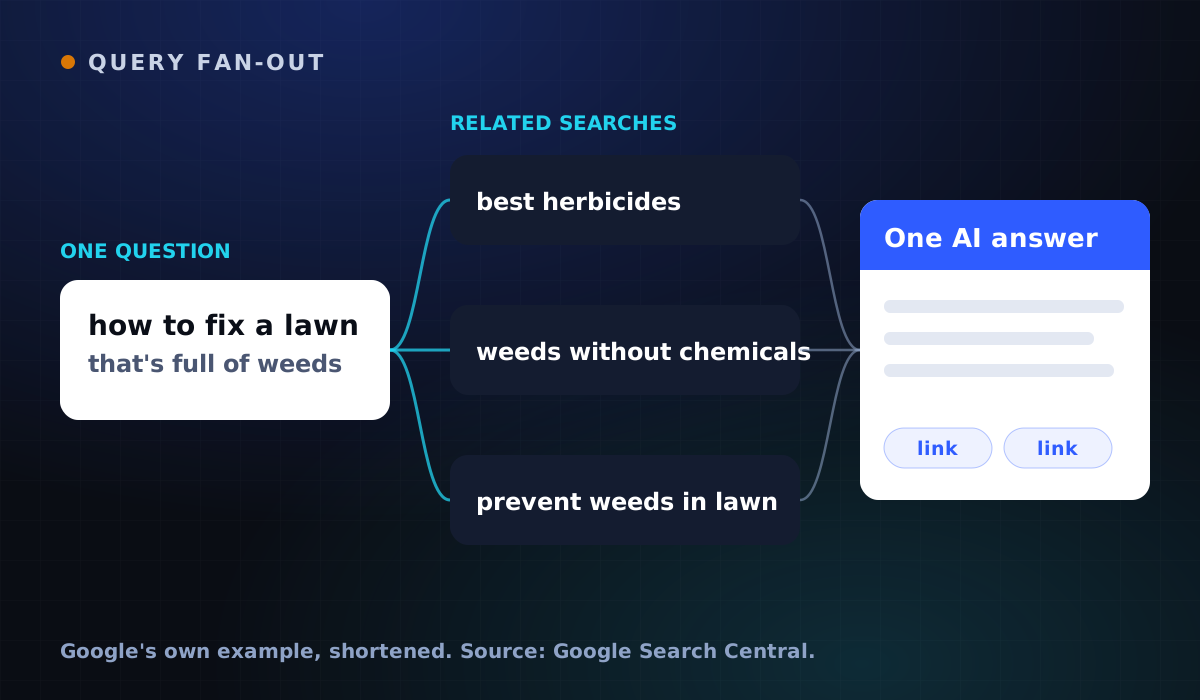
- Query fan-out. The model fires several related queries at once to gather more results. Google's example: "how to fix a lawn that's full of weeds" fans out to queries like "best herbicides for lawns" and "how to prevent weeds in lawn".
A page that cannot rank, or cannot be indexed, cannot be retrieved. So it cannot be cited.
Above everything else, Google says content that people find unique, compelling and useful will likely matter more than any other suggestion in the guide. It contrasts commodity content, like "7 tips for first-time homebuyers", with first-hand, expert content that goes beyond common knowledge.
The myths it rules out
| Tactic | Google's position |
|---|---|
| llms.txt and other AI files | Not needed. Google Search does not use machine-readable files, AI text files, markup or Markdown. |
| Chunking content into tiny pieces | Not needed. Google can understand multiple topics on one page and show the relevant part. |
| Rewriting copy "for AI" | Not needed. The systems understand synonyms and meaning, so you need not chase every long-tail variation. |
| A page for every fan-out query | Harmful. Doing it mainly to manipulate rankings or AI answers violates the scaled content abuse spam policy. |
| Seeking inauthentic mentions | Not as helpful as it seems. Ranking systems reward quality and other systems block spam. |
| Special schema for AI | Not needed. There is no AI-specific schema.org markup. |
Two notes on that table.
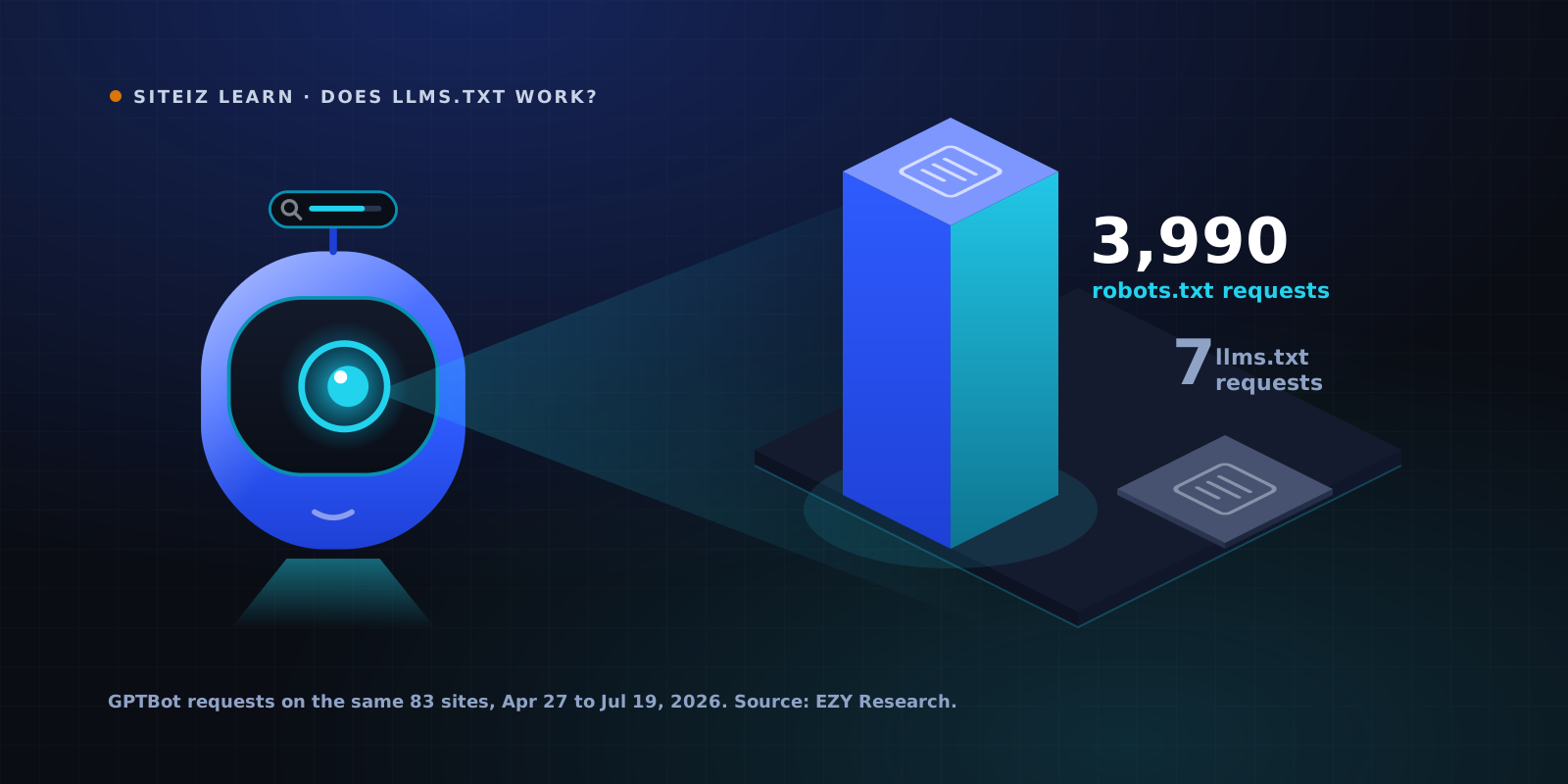
First, "not needed for Google" does not mean "useless". Google says outright that creating llms.txt for other services "will neither harm nor help" your Google visibility. A Markdown version of a PDF still helps a retrieval pipeline read it, which is why Markdown still matters for documents. It just will not lift you in AI Overviews. For what crawler logs show about who fetches llms.txt, read Does llms.txt work?
Second, structured data is not dead. Google recommends you keep using it, because it makes pages eligible for rich results. It is simply not a hidden AI switch.
What the guide says is required
Strip away the myths and the requirements are the ones technical SEOs already know, plus one new setting.
- Indexed and snippet-eligible. A page must be indexed and eligible to show in Search with a snippet. A
nosnippetpage does not qualify. - Included in Search Console. The site must be included in Search generative AI features in Search Console. This is easy to miss, so check the setting.
- Crawlable. Google's generative AI models use publicly accessible, crawlable content. Check robots.txt, your CDN and your firewall.
- JavaScript not blocked. Google can process JavaScript as long as it is not blocked, though Google itself calls JavaScript SEO more complex.
- Clean technically. Good page experience, less duplicate content, and semantic HTML where you can. Perfect code is not required.
Google also points to Merchant Center and Business Profile for product and local details, and to the Generative AI performance report in Search Console for measurement.
What the guide leaves out
This is a Google document about Google products. It says nothing about ChatGPT, Claude or Perplexity, and their crawlers differ from Googlebot in one way that matters.
Google can render your JavaScript. GPTBot, ClaudeBot and PerplexityBot read the HTML your server returns and stop there.
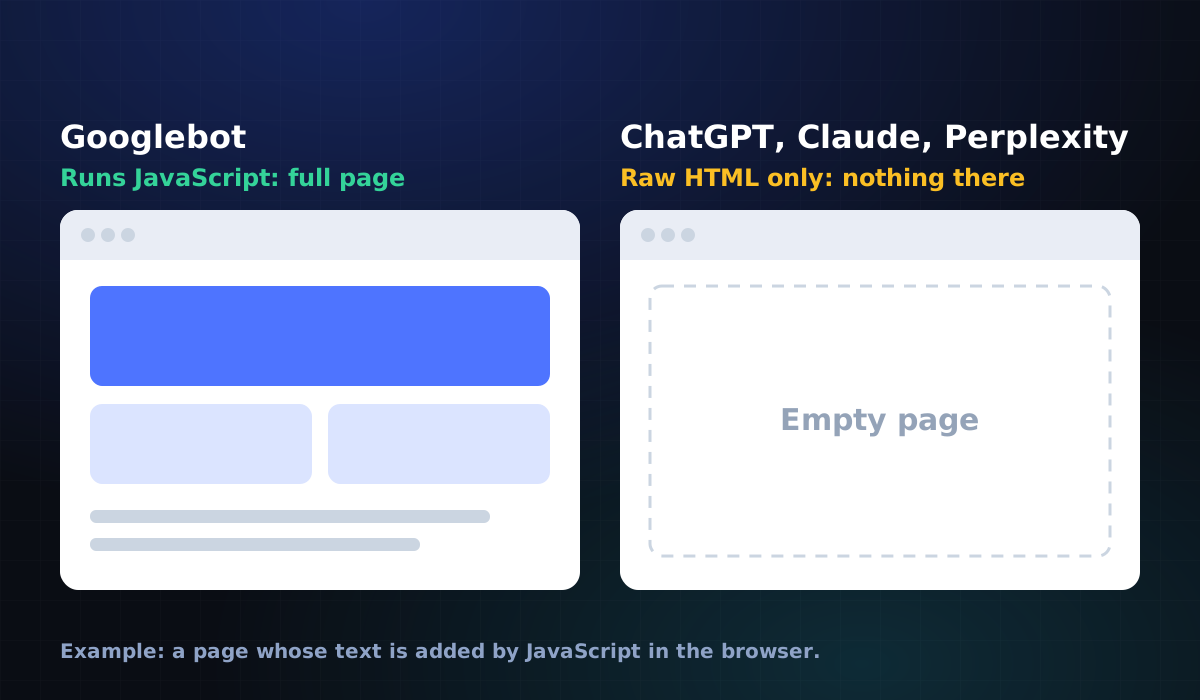
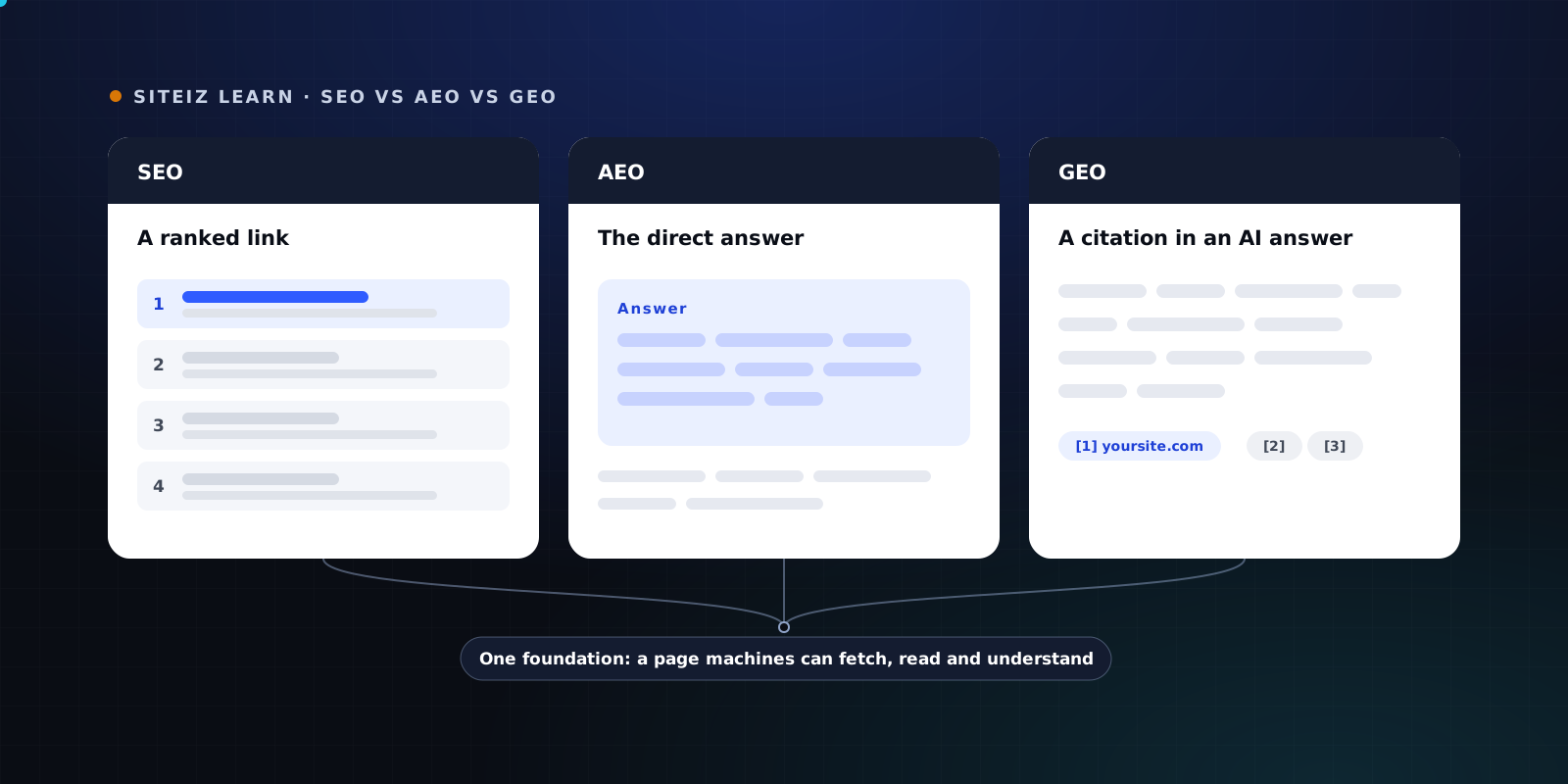
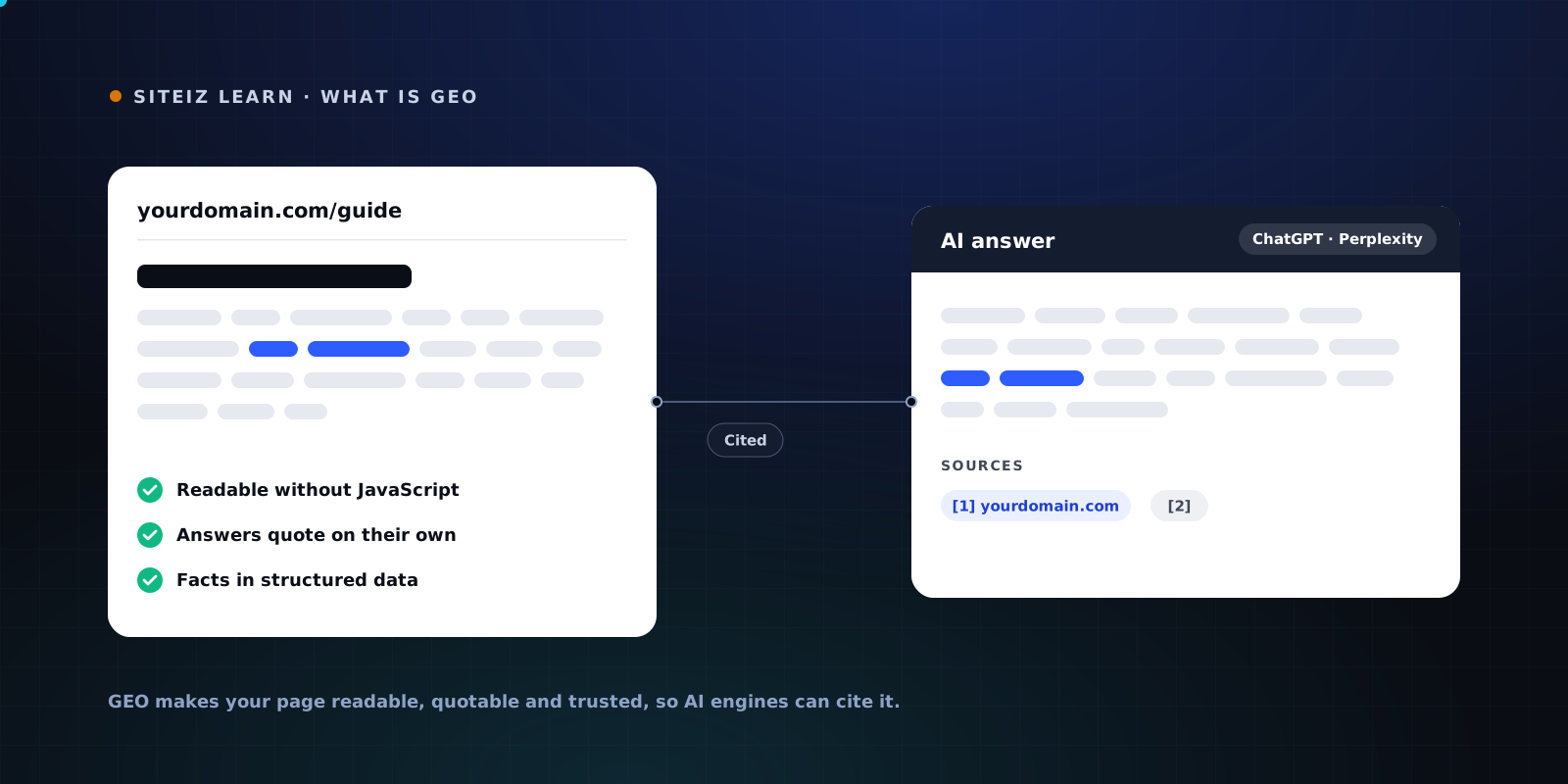
So the honest reading is this. For Google, GEO is SEO. For the rest of AI search, it is SEO plus making sure crawlers that do not render JavaScript can still read you. Our AEO vs GEO vs SEO explainer covers how the three terms relate. For how fast the non-Google side is growing, read AI search in 2027.
The guide also warns that no third-party tool has access to Google's internal ranking or AI systems. That applies to us too. Our scan does not claim to predict Google rankings. It measures what crawlers actually receive from your server, and the scoring method is public so you can check it.
What it means for your website
- Stop buying the shortcuts. Drop chunking projects, "AI rewrites", fan-out page farms and llms.txt retainers that promise Google AI visibility.
- Check the Search Console setting. Confirm your site is included in generative AI features, then watch the Generative AI performance report.
- Audit the basics. Crawl access, indexing, snippet controls, duplicates.
- Check the non-Google gap. Fetch your key page without JavaScript and confirm the main content is in the response.
- Spend on content only you can write. First-hand experience, original data, real product detail.
Check what crawlers that do not run JavaScript get from your page with the free Siteiz scan.
FAQ
Common questions
Short answers to what people ask most about this topic.
Does Google say GEO is different from SEO?
No. The guide says that from Google Search's perspective, optimizing for generative AI search is optimizing for the search experience, and thus still SEO. AI Overviews and AI Mode are rooted in the same core ranking and quality systems as regular Search.
Do I need llms.txt or Markdown pages for AI Overviews?
No. Google says you do not need machine-readable files, AI text files, markup or Markdown, because Google Search itself does not use them. Creating llms.txt for other services neither helps nor harms your Google visibility.
Should I create a page for every fan-out query?
No. Google warns that creating separate content for every query variation, including fan-out queries, mainly to manipulate rankings or AI responses violates its scaled content abuse spam policy.
Does Google's guide apply to ChatGPT and Perplexity?
No. It describes Google's own systems. Google can process JavaScript as long as it is not blocked, while GPTBot, ClaudeBot and PerplexityBot read only the HTML your server returns, so a page can follow every point in the guide and still be empty to ChatGPT.